Gemsigns on the radio: podcast and other larks

I had a great time on Ujima Radio in Bristol yesterday. Cheryl Morgan invited me on to the Talking Books segment of the Women’s Outlook show to discuss Gemsigns. I haven’t yet been able to listen to the show, but I think it went well. Cheryl is a very good interviewer, and after a nervous first couple of minutes I relaxed into it. You can listen here, and tell me what you think in comments.

Then we went to Foyles and Blackwell’s, and I signed books, and a lovely lady who was looking for something to read got very excited and shook my hand, because I was the first real live author she’d met. Which made me feel like a real live author. We had coffee in a wonderfully eclectic cafe / vintage clothing store / performance space called the Birdcage, and I was taken on a walking tour of Bristol, which is a far more hip and cool and happening city than I had realised. Many thanks again to Cheryl, who is gracious and kind, and endlessly helpful.

Then on to London, where it feels like I am making a slow start this morning, though that can’t be true: I’ve been awake for ages. It’s publication day! I’m signing more books at Forbidden Planet later this morning, as well as at Jo Fletcher Books HQ. And it’s a Thursday so that means free books. Watch out for the next post …

Writers’ Room: Stephanie Saulter on Sci-Fi | Free Word Centre

Many thanks to Sam Sedgman and Free Word Online for inviting me into the Writers’ Room this week. Here’s the result.

Writers’ Room: Stephanie Saulter on Sci-Fi | Free Word Centre.

The author of ‘Gemsigns’ takes literary snobs to task with a passionate defence of science-fiction, and explains how she managed to fit writing a debut novel into the rest of her life.

Why are you a writer?

Because I can be.

I know the more fashionable answer is something along the lines of ‘because I just have to be’ or ‘because I couldn’t possibly be anything else.’ No disrespect whatsoever to those writers, but the simple truth is that I have spent most of my life not being one, and it would be disingenuous to suggest otherwise. Being a writer felt like the apex: the thing I would do when I felt that I knew enough, understood enough, could risk enough, to do it well. All those years of not being a writer were, to a fairly conscious degree, training to become one. There’s a real sense of reward about it: I’ve worked hard to build my own understanding of the world, I’ve remained curious, I’ve paid attention to other people’s stories – both the ones they tell themselves and others, and the ones they unconsciously live every day. There’s a moment when all of that starts to gel, when you think ‘I know what’s going on here. I can turn this into stories of my own. I can start to be a writer.’ 

This is your debut – how did you fit writing a novel into everything else in your life?

Strangely, that was the easy part. I had taken redundancy and gone freelance in the latter part of 2010, and had moved out of London into the Devon countryside to boot. It was April 2011 and I’d just finished a major project – so there was a bit of extra cash in the bank account – and I was waiting for word on several more that were in the pipeline. I had a bit of slack time, so I started organising several years’ worth of notes and research into the outline for the novel that had been steadily growing in my head for all of that time. And then I started writing it, and I couldn’t stop. I didn’t want to stop. As luck would have it, all of the jobs I was waiting on fell through. As even better luck would have it, two of my best friends came to stay over the May bank holiday, read what I’d written, and said ‘You need to stick with this. If you can afford to spend the next few months writing it, that’s what you should do.’ I knew I could rely both on their judgement and their honesty; they wouldn’t have told me that if it wasn’t really what they thought. And it was one of the few times in my life when I could afford to. So I did, to the exclusion of everything else.

Sci-Fi is often given short shrift by book critics – even though it’s enduringly popular and the home of some of our most politically-aware writing. What drew you to the genre?

I’ve never not read speculative fiction, whether based in fantasy or science. Two of my favourite and most formative books – I read them both for the first time when very young – are The Lord of the Rings and Frank Herbert’s Dune, and I suspect the course of my life in fiction was pretty much charted there. While fantasy lets you imagine a different world entirely, science fiction provides a vehicle for thinking about where our current challenges and dilemmas and obsessions may lead us. In Gemsigns in particular I wanted to look at how patterns of human behaviour recur and are endlessly explained and excused away. I wanted to examine belief systems – in a world in which science has quite literally and unequivocally been the salvation of humankind, does its works then go unquestioned in the same way that perceived acts of god are unquestioned among those of a religious bent? And what place does religion have in such a world? Is it progressive or static or reactionary? Does it survive at all?

If you want to ask those kinds of questions in fiction, if you want to speculate about what the answers may be, then you have to root the world you want to explore in some kind of internally consistent logic.  One route to that is the complete otherness of fantasy, but I prefer the connection with our current reality that scientific speculation provides. That seems to me an entirely sensible and artistically valid route to take, but there’s a very weird pathology at work in the way that most mainstream critics, and even many regular readers, view science fiction. It is a perpetually limited vision which has little in common with the reality of the genre. For one thing it’s generally presumed that if it’s labelled ‘science fiction’ it has to take place in the far future, in space, with aliens and robots and ray guns. Not that I don’t love a bit of space opera myself, but I am forever having to explain that this is not a prerequisite – not least when it comes to my own work, which has no anti-gravity or esoteric weaponry whatsoever and takes place mainly in the East End of London.

Another presumption is that stories rooted in speculation about where scientific development might take us cannot possibly have any literary merit; that they are by definition tech-heavy thrillers with little character development or emotional weight. It’s a bizarre view that having the one somehow precludes the other. Now it’s certainly true that there are a lot of SF & F novels out there that we could probably all agree aren’t  literary masterpieces, but I’m not aware of any other genre – crime, romance, or even the vaunted category known as Literary Fiction – that is universally judged by its least accomplished examples. I never know if the lit-crit establishment that looks down its collective nose at science fiction is being accidentally obtuse or intentionally obfuscatory, but they certainly manage a strong line in self-deception. What kind of books do they think Frankenstein and Brave New World and 1984 were, before they were deemed classics? Do they really imagine that Margaret Atwood and David Mitchell are not writing about the possible futures that might result from the decisions we make in the present? Have they not noticed that Hilary Mantel, celebrated author of, among other things, Beyond Black, is a jaw-droppingly good writer of supernatural horror as well as historical fiction – and that she illustrates the human condition just as well there?

Gemsigns, by Stephanie Saulter

How do you write?

When I’m in the early stages of a project, trying to work out what it’s about and who’s in it and what happens, I tend to scribble in notebooks and carry them around with me. It’s sort of the stream-of-consciousness phase when you are following the threads in your head, making connections. The writing down of things at this stage is more mnemonic than anything else. It’s not exclusively longhand, sometimes there are rambling, random screeds typed into the computer, or tapped out on my phone. A lot of it may look suspiciously like gazing blankly out of the window with a cooling cup of tea in your hand, or going for long, aimless walks in the country, but it’s all part of the process of writing. And it’s iterative; I have episodes like that throughout. I find you need them, as you work through knotty plot points and develop character arcs.

But when I actually feel the shape of the thing strongly enough in my head to be able to start turning it into prose, I write on my laptop (which is a MacBook Pro if anyone wants to know; I used Microsoft Word for Gemsigns, Scrivener for Binary). I find it very difficult to pop in and out of story-mode, so I try to dedicate big chunks of time to it; I haven’t yet got the knack of how to do something else all day and then write for a couple hours at night. So I’ll set aside a span of days in which that is all I’m going to be doing, and I treat it like a job; I start around 9 or 10 in the morning and I go all day. I usually begin by going over what I did the day before, which serves both as a first edit and to get me back into the mood and moment of the piece; and then I take it forward. I’ll have a word count I want to hit: I feel defeated if I miss it and triumphant if I exceed it. In theory I stop around 6 in the evening, make dinner, and that’s it for the day. In practice, especially if it’s going well or if I’m close to the end of a scene or a chapter, I go back to it and work into the night. Having a laptop means I can move around the house, so although I often start in my office in the basement, which has the ergonomic chair and the desk at the right height, I tend to migrate up into the kitchen or out into the conservatory. I’ve written huge amounts of both books sitting cross-legged on the sofa. It’s hell on my back, but good for the words.

If I’m in the mood to write it doesn’t matter whether I’m in the city or the country; the last really good bit of work I did on Binary was in the Barbican Library in London. But being able to take a break and go for a stroll along country lanes at four o’ clock in the afternoon was great for Gemsigns. By then you’ve been working solidly for a few hours and you need a breather and to take stock, and there’s usually some unforeseen problem that needs solving. The solution would almost always emerge about ten minutes after I’d left the house. All my farming neighbours got used to seeing me standing stock still in the middle of some muddy track, making notes on my phone. The arch-villain emerged fully formed out of a hedgerow one day, and some of the most cutting lines of dialogue were composed in the company of sheep.

What’s the hardest lesson you’ve learned from writing?

That because it was easy today doesn’t mean it’ll be easy tomorrow. As a rule, the more you do something the better you get at it and the easier it becomes. Maybe that will happen for me with writing too, but it hasn’t yet. I’ve been struck, as many new novelists are, by the challenges of the second book. Some of the things that felt almost reflexive with Gemsigns, that just sailed out of my head through my hands and onto the page without any fuss at all, have been a real struggle with Binary. And some of the things I felt most unsure of with Gemsigns have been the simplest, most fun parts of writing Binary. I’ve learned not to presume that because I’ve written one decent book I can now just churn them out. Getting it right on the page is a constant challenge.

What are you reading at the moment? And how is it?

Cloud Atlas, and it’s wonderful, but honestly it doesn’t lend itself to my schedule at the moment. I’m finding I don’t have time for more than half an hour’s reading late at night, and it’s the wrong kind of book for that. Cloud Atlas is a novel you should curl up with on a long, lazy afternoon with no distractions. A good book for a tedious train journey. I may have to finish it on one of those.

Stephanie Saulter is the author of Gemsigns, available from Jo Fletcher Books.

All over Eastercon

This time next weekend I’ll be at the Cedar Court Hotel in Bradford, halfway through my first Eastercon; in its 64th incarnation this year and therefore dubbed EightSquaredCon. I’ve been sent my schedule, and am flattered to find myself on the programme more times than may be entirely seemly. (Of course I’m going to share it anyway.) Let me know in comments if you’re going to be there, and if you are please do say hello!

Friday 29th March, 6pm – Debut Authors Panel

New authors talk about starting out: how to get published, and what happens when you do.

Saturday 30th March, 1pm – The Far Future

Let’s not waste time: we should get on with solving the problems facing us in five or ten billion years (crashing galaxies, red giant Sun, possible gamma bursts …). If we make it that far, what will our civilisation have grown into? Will we be ready when the stars go out? Fran Dowd moderates Stephen Baxter, Stephanie Saulter, Ian Watson and Walter Jon Williams.

Saturday 30th March, 5pm – Author Readings – Gareth Powell and Stephanie Saulter

Gareth and I read from our latest work. Mine is likely to feature a hungry, headachey (super) heroine; his a foul-mouthed monkey fighter pilot. (Which makes our books sound far more similar than they are …)

Saturday 30th March, 7pm – Genre Get-Together – Science Fiction

Meet and chat to authors, and get your books signed!

Sunday 31st March, 11am – Why is the Future Drawn so White?

When the protagonist of Justine Larbalastier’s Liar was whitewashed in the cover art, both the author and the internet were outraged and the cover was eventually changed. Yet characters of colour are still all too often absent or elided. How can we work to challenge this and why does it happen? Caroline Hooton moderates Dev Agarwal, Aliette de Bodard, CE Murphy, Tajinder Singh Hayer and Stephanie Saulter.

Sunday 31st March, 7pm – Jo Fletcher Books/Quercus Party

Join the editors and authors of Jo Fletcher Books and Quercus for a drink and a chat. This year sees debut novels from Stephanie Saulter (Gemsigns), Naomi Foyle (Seoul Survivors), and David Towsey (Your Brother’s Blood). Come along to meet the writers and learn more about them and their books.

(And remember: no need to wait a whole week for a mega science fiction fix. I’m still giving away one of the best SF novels of the year to whoever comes up with the coolest alternate universe. Short – even tweetable – answers are perfectly acceptable.)

Win ‘Planesrunner’ by Ian McDonald

The last book giveaway generated some great responses, and I have a feeling this week’s offering will be equally inspirational. The lucky winner will receive a book I read and raved about just a few weeks ago. I’m so pleased to be able to pass this gem on to some lucky reader – maybe you! Before I get too excited, here’s a reminder of the competition format:

I post a summary of the book, plus a thought or two of my own about an aspect of it that I find especially intriguing. Then I ask you to tell me about your particular version of that particular reality. What do I mean? Read on:


Plannesrunner_Bfmat

There is not just one you, there are many yous. We’re part of a multiplicity of universes in parallel dimensions – and Everett Singh’s dad has found a way in.

But he’s been kidnapped from the streets of London, right under his son’s nose, and now it’s as if Everett’s dad never existed. The police won’t help, and his mum thinks Everett has brought shame on his family. There is only one clue for him to follow, a mysterious app his dad sent to his iPad: the Infundibulum.

The app is a map, not just to the Ten Known Worlds, but to the entire multiverse – and there are those who want to get their hands on it very badly. Now Everett’s got to find a way to unlock the secret of the Infundibulum and cross entire dimensions to find his father. If he’s going to beat the bad guys, he’s going to need friends: like Captain Anastasia Sixsmyth, her adopted daughter Sen, and the crew of the airship Everness.

Ian McDonald’s novels explore the idea of a multiverse, an infinite sequence of alternate universes each of which is different from the one we know. The difference here on Earth may be one tiny, almost unnoticeable thing – a slightly altered pattern on the wing of a particular butterfly, for example. Or it may be huge – maybe the continents never broke apart. To win a copy of Planesrunner, tell me this: How would the alternate universe you’d most like to visit be different from this one?

Post your answer in comments, or tweet it to me @scriptopus (or both!). You have until midnight on Sunday (UK time) to get it in, then I’ll pick a winner. The competition is open to you wherever you are in the world, as long as your answer is in English. Prizes will be dispatched from Jo Fletcher Books HQ in London, and remember, we’ll need your address if you win.

Here’s the question again: How would the alternate universe you’d most like to visit be different from this one?

We’re all winning

My word, but I’m having a week.

First things first: congratulations to akaellisfisher for winning Blood’s Pride with an answer that was both thoughtful and contrarian (and a belated front-page shout-out to Mike Albright, who won A Cold Season a week earlier). And this week’s book giveaway is not to be missed!

Next thing most: over the weekend I finally took delivery of my own baby. That’s right folks, Gemsigns is 400 pages of big, beautiful book with weight and heft and texture, and that glorious new-book smell. Our inscrutable heroine (or is she the villain?) stares defiantly out from behind shards of red-tinted glass on the cover (or are they the fragmented planes of an unravelling double helix?), as if to say: You want a piece of this? 

Broad hint there about what’s on offer next week. Because next week is also Publication Week and Radio Week and Eastercon Weekend. There’ll be lots going on online as well as on air, and without pre-empting the Con programme (not yet published), I’ve had confirmation that I’m going to be on it as a panelist. The rate of bloggage and tweetage will rise sharply. With any luck there’ll be reviews and interviews  …

Which brings me back to this week: I was interviewed on camera for the first time ever today. It was a deer-caught-in-the-headlights experience. I’m told I wasn’t completely rubbish (though I have my doubts). You be the judge: it should be up on YouTube within a few days, and I promise to link it no matter how cringeworthy it might turn out to be.

Phenomenal thing finally: Last week was epic for my brother Storm, whose award-winning debut feature film Better Mus’ Come opened in New York’s Times Square and at the Downtown Independent Theatre in Los Angeles after sold-out sneak previews in Atlanta, Washington DC, Philadelphia, Seattle, Houston, Chicago and Port of Spain. The weekend numbers from NYC and LA were fantastic. The reviews from the Huffington Post and LA Times have been glowing. His Film Independent interview was fab (he’s much better at interviews than me, but then he has had more practice). He is brilliant and driven and generous, and he works incredibly hard. He deserves every moment of this.

Win ‘Blood’s Pride’ by Evie Manieri

Free books are back! I took a break last week for reasons explained here, but thankfully things have settled down to a still-intense-but-manageable pace and I can return to giving away great reads:

untitledA generation has passed since the Norlanders’ great ships bore down on Shadar, and the Dead Ones slashed and burned the city into submission, enslaving the
Shadari people.

Now the Norlander governor is dying and, as his three alienated children struggle against the crushing isolation of their lives, the Shadari rebels spot their opening and summon the Mongrel, a mysterious mercenary warrior who has never yet lost a battle. But her terms are unsettling: she will name her price
only after the Norlanders have been defeated.

A single question is left for the Shadari: is there any price too high for freedom?

I confess I haven’t yet read Blood’s Pride, but one of the aspects of it I think must be fascinating is how the Norlanders do – or do not – communicate; they are called the Dead Ones because they are gaunt, pale, lack facial expressions or body language, and are almost entirely without speech. They communicate by telepathy and a sort of empathic transmission. Evie Manieri talks about the challenge of writing dialogue for characters who don’t speak here, and it made me think about what it would be like to communicate in such a profoundly different way. So my question this week is: Would you give up speech for telepathy? Why, or why not?

Post your answer in comments, or tweet it to me @scriptopus (or both!). You have until midnight on Sunday to get it in, then I’ll pick a winner. The competition is open to you wherever you are in the world, as long as your answer is in English. Prizes will be dispatched from Jo Fletcher Books HQ in London, and remember, we’ll need your address if you win.

In the lap of the reviewers

So Gemsigns is in. Not in my hot little hands, sadly – I am still camping out at a Premier Inn in Leeds, not really the place to have cases of books sent. But it’s in at the publisher’s, wherefrom copies are flying right back out again, into the hands of reviewers and bloggers. I’m nothing if not a realist, and excited though I am by this, I know that not all of them will love it. The chances are good that not all of them will even like it, or get it, or think that it’s about the things that I think it’s about. As a friend said to me last night, it isn’t just mine now, and it will have as many meanings as it has readers.

That’s fine. No, really. Gemsigns is about many things to me, and one of them is truth – more specifically the way truth differs depending on who you are and where you stand. And as in art, so in life.

So before any of them have had a chance to read and comment, to love or loathe or be lukewarm, I want to thank all of the reviewers. Thank you for entering the world of the ®Evolution. Thank you for getting to know its people. Thank you for taking the time to say what you think; thank you for your truth.

How to Help Debut (or, really, any) Authors

A really great primer from Laura Lam on what debut authors need from their readers.

Laura Lam's avatarLaura Lam

I’ve had quite a few people (well, okay, like 5) ask me the best way to support me, and so I thought I’d collate the information I’ve learned. Obviously, this isn’t a completely altruistic post (as evidenced by my clever buy links) and it’d be wonderful if you use this information to help Pantomime, but some of this was new to me, it might be for you as well, and you can use it to help all the wonderful books that need a little extra love.

Buy the book

Yes, seems obvious, but really the best way to support an author is to pay with your dollar/pound/currency of choice. Debuts especially live and die by the numbers, especially in the early months. These numbers can have a huge impact on the writer’s career, such as if further books in the series are commissioned.

If you can’t buy it: request…

View original post 1,141 more words

Sometimes you feel overwhelmed because it really is overwhelming

Feeling anxious and a touch inadequate at the moment, as though I am simply incapable of getting enough things done. It bugs me because normally I’m one of those people who can ALWAYS get EVERYTHING done. But I just had to send a guilt-ridden note of apology for not being able to focus to my beloved brother, and found myself explaining that it’s because I’m far away from home, staying in a bland business hotel in the north of England and working 12-hour (or more) days, with virtually no time to do or prepare for anything else – despite the fact that my first novel is out in 3 weeks, I’m on the radio for the first time ever the day before, I’m going to be on a number of panels at a book convention starting the day after, and I’ve got an almost-finished (but still UNfinished) manuscript on my computer, on my conscience, and due at my publisher’s in less than two months.

I read back what I’d written to him and thought, hmm. Maybe my head being a little less well-ordered than usual is not actually all that unreasonable.

The next two days are going to be killer. Next week will be pretty bad as well, although I’m hoping it’ll settle down to something more manageable by Wednesday; and by the end of the following week my part in The Project in the North will be over. But for the moment I think I’m going to try to go a bit easier on myself. The next book giveaway may be delayed until I feel I can give it due time and attention. I’m going to stop beating myself up about not being able to sit down at the computer at 9pm after a shattering day and bang out a couple thousand words of  beautiful prose, or a witty blog post about the joys of authorship.

Everything will get done, eventually. I promise.

Sx.

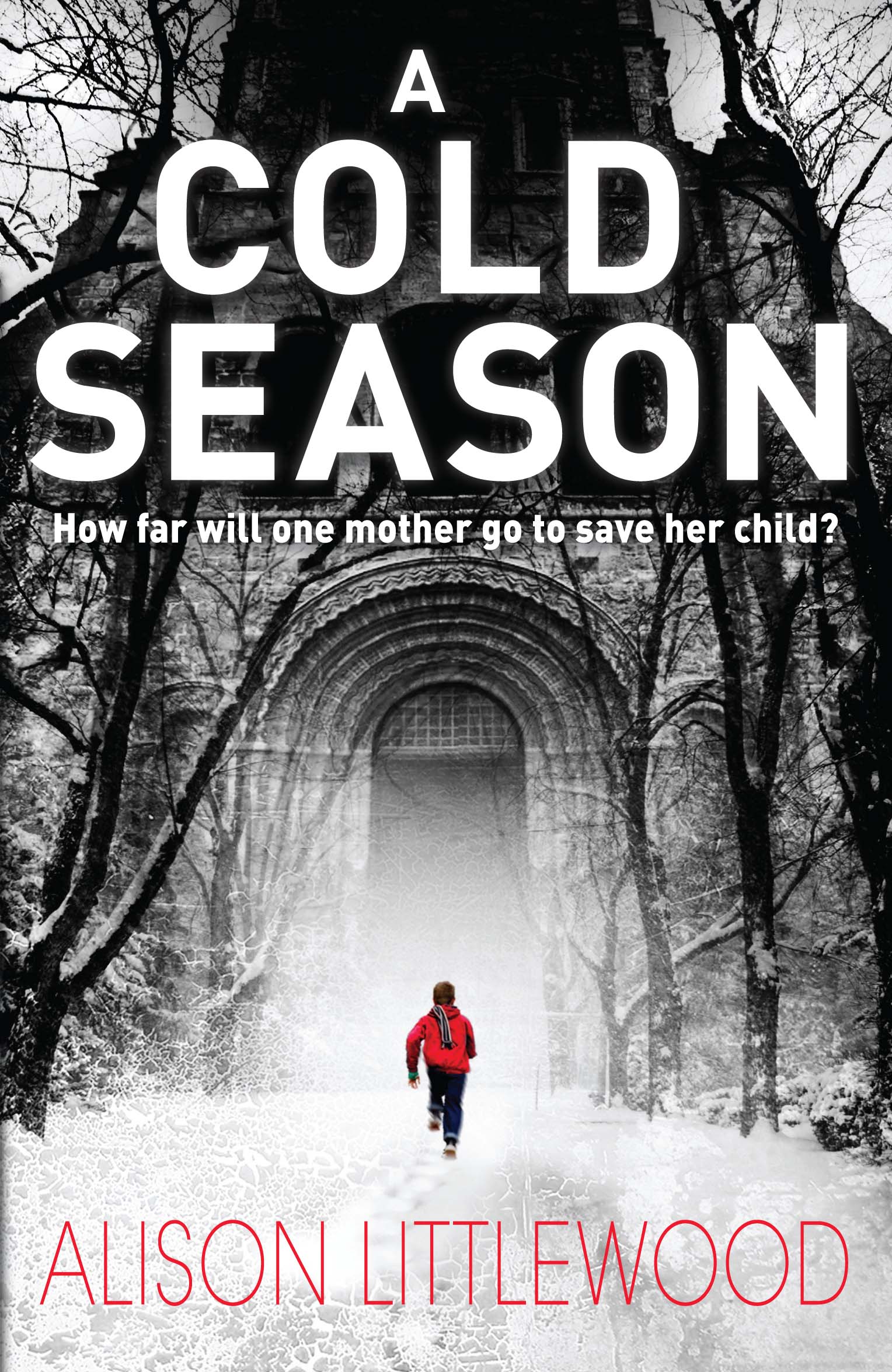
Win ‘A Cold Season’ by Alison Littlewood

It’s a surprisingly frosty morning in north Devon and I’ve got a book to give away that feels just right for the last gasp of winter:

43629_Cold_Season_MMP.indd

Cass is building a new life for herself and her young son Ben after the death of her soldier husband Pete, returning to the village where she lived as a child. But their idyllic new home is not what she expected: the other flats are all empty, there’s strange graffiti on the walls, and the villagers are a bit odd.

And when an unexpectedly heavy snowstorm maroons the village, things get even harder. Ben is changing, he’s surly and aggressive and Cass’s only confidant is the smooth, charming Theodore Remick, the stand-in headmaster.

Not everyone approves of Cass’s growing closeness to Mr Remick, and it soon becomes obvious he’s not all he appears to be either. If she is to protect her beloved son, Cass is going to have to fight back.

Alison Littlewood uses the harsh weather, coupled with the bleak environment of the moors, to reflect a growing sense of crisis for Cass and her son. Winter is almost always a metaphor for danger in fiction, and as this one comes to an end we’re probably all heaving a sigh of relief. The competition question is: What’s the worst thing about winter?

Post your answer in comments, or tweet it to me @scriptopus (or both). You have until midnight Sunday 3rd March to get it in, then I’ll pick a winner. The competition is open to you wherever you are in the world, as long as your answer is in English. Prizes will be dispatched from Jo Fletcher Books HQ in London, and remember, we’ll need your address if you win.

  • Unknown's avatarI love stories.
    My new novel, Sacred, is all about them. Publication info will be posted as soon as I have it.

    In the meantime check out Gemsigns, Binary and Regeneration, available wherever good books are sold.

  • Upcoming Events

    No upcoming events

  • Latest tweets

  • Enter your email address to follow this blog and receive notifications of new posts by email.

    Join 211 other subscribers
  • UK edition

    REGENERATION

    The 3rd Book of the ®Evolution

  • UK edition

    BINARY

    The 2nd Book of the ®Evolution

  • UK Edition

    GEMSIGNS

    The 1st Book of the ®Evolution

  • US Edition

    REGENERATION

    The 3rd Book of the ®Evolution

  • US Edition

    BINARY

    The 2nd Book of the ®Evolution

  • US Edition

    GEMSIGNS

    The 1st Book of the ®Evolution

  • Meta